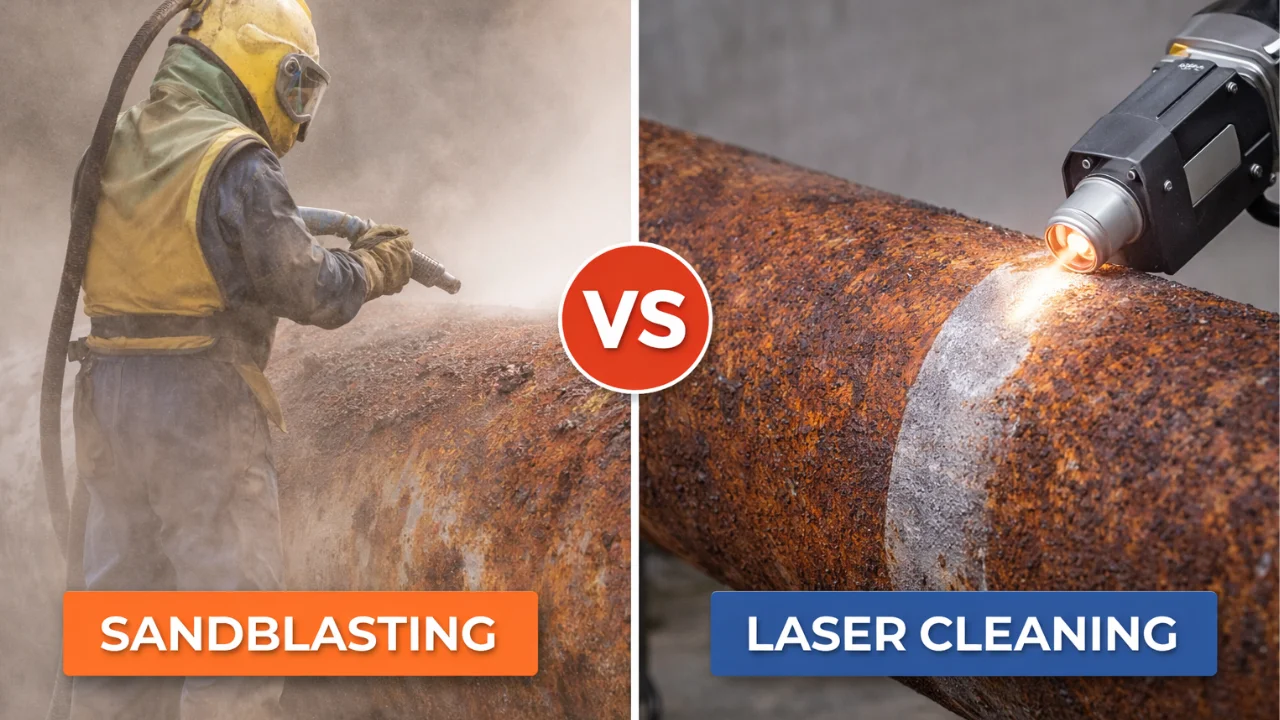
Surface preparation plays a critical role in industrial maintenance, infrastructure preservation, manufacturing, and restoration. For decades, sandblasting has been widely used for removing coatings, rust, and contaminants. However, as industries focus more on long term efficiency, environmental compliance, and operational safety, laser cleaning is becoming a strong alternative.
To make an informed decision, businesses must evaluate the long term financial impact of both technologies. This article provides a realistic ROI breakdown of laser cleaning vs sandblasting for a 5 year period, examining equipment investment, operating costs, labor efficiency, compliance requirements, and asset performance.
Initial Equipment Investment
The upfront purchase cost is often the first factor businesses evaluate when comparing surface preparation technologies.
Sandblasting Equipment Investment
Industrial sandblasting equipment typically ranges between approximately $25,000 to $500,000 depending on system size, automation level, and containment requirements. In many cases, additional infrastructure such as blast rooms, dust collection systems, and containment enclosures increases total setup costs.
Sandblasting also requires continuous use of abrasive media such as sand, steel shot, or glass beads. These materials must be replaced frequently, creating recurring operational expenses.
Laser Cleaning Equipment Investment
Commercial and industrial laser cleaning machines typically range between approximately $35,000 to $500,000 depending on wattage, automation, and application requirements.
While the initial cost may appear similar to higher end blasting systems, laser cleaning eliminates consumable media and reduces infrastructure requirements. Over time, this becomes a major advantage in the ROI breakdown of laser cleaning vs sandblasting for a 5 year period.
Operating Costs and Consumables
Recurring operating costs significantly influence long term profitability.
Sandblasting Operating Expenses
Sandblasting requires ongoing purchases of abrasive media. Media usage varies by project size but remains a consistent recurring cost throughout the equipment lifecycle.
Additional expenses include:
- Media storage and handling
- Dust collection maintenance
- Cleanup materials and containment barriers
- Waste transportation and disposal
These operational costs accumulate rapidly across multiple projects and can become a major financial burden over five years.
Laser Cleaning Operating Expenses
Laser cleaning primarily requires electricity and routine equipment maintenance. There is no need for abrasive media or chemical solvents.
Maintenance typically involves cooling system servicing, optics inspection, and scheduled equipment checks. Because there are fewer consumables, laser cleaning delivers greater cost stability over extended periods.
Labor Efficiency and Productivity
Labor costs directly affect total project expenses and downtime.
Sandblasting Labor Requirements
Sandblasting often requires significant preparation including containment installation, ventilation setup, and extensive cleanup after completion. Handling and disposing of spent media also adds additional labor time.
These tasks increase total project duration and reduce overall productivity.
Laser Cleaning Labor Advantages
Laser cleaning requires minimal containment and reduced cleanup. The technology allows operators to perform targeted cleaning instead of blasting entire surfaces.
Reduced preparation time and faster inspection readiness contribute to improved workforce efficiency. Labor savings frequently become one of the largest contributors when evaluating the ROI breakdown of laser cleaning vs sandblasting for a 5 year period.
Environmental Compliance and Waste Disposal Costs
Environmental regulations continue to increase across industrial and municipal sectors.
Sandblasting Waste Management
Sandblasting generates large volumes of spent abrasive media mixed with coatings, rust, and contaminants. Disposal often requires specialized handling and regulatory compliance procedures.
Facilities may also require permits, air quality monitoring, and environmental documentation.
Laser Cleaning Environmental Benefits
Laser cleaning produces extremely small particulate waste that can be captured using filtration systems. There is no abrasive media disposal and no chemical solvent waste.
Lower waste volume and simplified compliance procedures significantly improve financial outcomes in a five year ROI comparison.
Equipment Maintenance and Durability
Sandblasting systems experience heavy wear because abrasive media continuously flows through hoses, nozzles, and containment systems. Replacement parts and maintenance downtime increase long term costs.
Laser cleaning machines have fewer components exposed to mechanical wear. With proper maintenance, they maintain stable performance and predictable service schedules.
Surface Quality and Long Term Asset Protection
Surface preparation quality directly affects coating performance and corrosion prevention.
Sandblasting can create uneven surface profiles if not carefully controlled. Over blasting may weaken metal or require additional finishing work.
Laser cleaning removes contamination with precision while preserving base material thickness. Improved surface integrity enhances coating adhesion and reduces repainting frequency, which contributes to long term savings.
Five Year Financial Comparison Overview
When analyzing the ROI breakdown of laser cleaning vs sandblasting for a 5 year period, organizations commonly observe:
- Comparable upfront equipment costs depending on system type
- Significantly lower consumable expenses with laser cleaning
- Reduced labor setup and cleanup time
- Lower environmental compliance and disposal costs
- Extended coating life and reduced rework
- More predictable maintenance expenses
Many businesses reach cost parity or long term savings with laser cleaning depending on usage frequency and application requirements.
Industry Trends Driving Laser Cleaning Adoption
Manufacturing, shipbuilding, oil and gas, infrastructure maintenance, and municipal operations are increasingly adopting laser cleaning technology. Companies focused on sustainability initiatives and lifecycle cost reduction find laser cleaning supports both operational and regulatory goals.
Why Choose Clean Laser Technologies
Clean Laser Technologies manufactures commercial and industrial grade laser cleaning machines built for demanding real world environments. Their systems are engineered in the United States using globally sourced components and designed for durability and performance.
Clean Laser Technologies supports customers with:
- Commercial and industrial grade laser cleaning systems
- Comprehensive operator training
- US based technical service and maintenance
- Equipment financing assistance
- Lifetime support after purchase
For organizations evaluating the ROI breakdown of laser cleaning vs sandblasting for a 5 year period, working with a knowledgeable manufacturer helps maximize return on investment.
Final Thoughts
Surface preparation methods continue to evolve as industries seek safer, cleaner, and more cost effective solutions. Sandblasting remains widely used, but laser cleaning provides strong long term advantages in operating cost reduction, environmental compliance, labor efficiency, and asset preservation.When evaluated across equipment investment, operational expenses, and lifecycle performance, the ROI breakdown of laser cleaning vs sandblasting for a 5 year period demonstrates why many industries are transitioning toward laser cleaning technology.


